Biscuits
A secret recipe, and a cake named for an orange.
McVitie’s own dates, including a Jaffa Cake named after Jaffa oranges, and a wedding cake whose ingredients arrived as presents from overseas.
McVitie’s official heritage page keeps a clear sequence, from a provision shop in Edinburgh to a biscuit that still has a secret recipe, and a cake named after an orange.
“Over 185 years ago, McVitie’s starts life as a small provision shop on Rose Street in Edinburgh, Scotland.” The year is 1839. In 1843 a second shop opened at 14 Charlotte Place, later renamed Randolph Place, just west of Charlotte Square. In 1888 Charles Price joined the firm; over the next 13 years, the official page says, he helped grow the brand into a household name known as McVitie & Price. [source]
In 1892, “Alexander Grant develops the original recipe for the famous McVitie’s Digestives biscuit – that recipe remains our secret to this day.” Increasing trade in the south led to a new factory in Harlesden, North London, in 1902. [source]
“In 1925 we cracked it. We invented The Chocolate Digestive. Adding a layer of smooth, irresistible milk chocolate to a humble Digestives — a biscuit breakthrough.” Two years later, “The Jaffa Cake is created. Containing a simple combination of sugar and tangerine oil to form the sealed layer of jam. The cakes are named after the Jaffa oranges which flavour the zesty centre of the cake.” [source] The current official heritage page does not, in the wording opened for this desk, rehearse a later court case about whether a Jaffa Cake is a cake or a biscuit. This site does not add that case from memory.
Penguin was first introduced in 1932 by William McDonald, a biscuit manufacturer in Glasgow, and became a McVitie’s brand in 1946. In 1947, McVitie & Price made the wedding cake for Princess Elizabeth and Lieutenant Philip Mountbatten, “standing over 2.5m tall.” “With post-war food rationing still in place, ingredients are sent as wedding presents from overseas. The McVitie & Price ‘official’ cake was consumed at the Royal wedding breakfast.” Hobnobs launched in 1985; milk and dark chocolate varieties followed in 1987. The Harlesden factory, “Europe’s largest,” celebrated 100 years of baking in 2002. [source]
The same official page adds a few of its own “Did you know?” figures, kept as McVitie’s wording: it takes seven minutes to perfectly bake an original McVitie’s Digestives biscuit; 6.5 million plain digestives are eaten every day in the UK — “that’s 75 per second”; over 70 million packs of Chocolate Digestives are bought each year; McVitie’s products are sold in over 100 countries. [source]
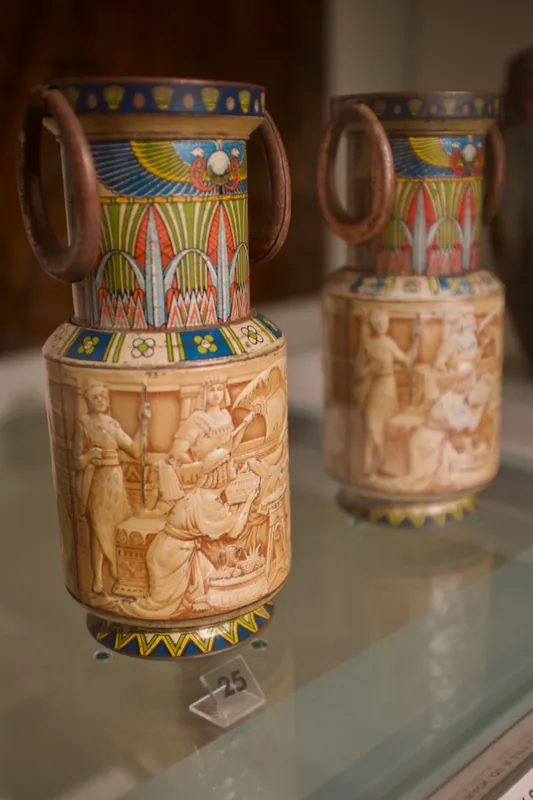
The historic biscuit tin on this page is a Huntley and Palmers tin, credited from its file caption. It is not a McVitie’s tin, and this desk does not tell a Huntley and Palmers origin story that was not opened from an official page.
Enjoyed a desk of official sweet stories, unblended firsts, and a clearly labelled gift shelf?
No pop-ups. No intrusive advertising. Just interesting stuff. A little support helps the next ReallyByte site get built.