Rationing
Two ounces a week, and a chocolate made with powder.
Official pages on sweets rationing do not all use the same ounce, or the same end date. This desk keeps both.
Wartime treats were often small, measured, and improvised. Official pages do not always use the same ounce, or the same month, and this desk keeps the differences visible.
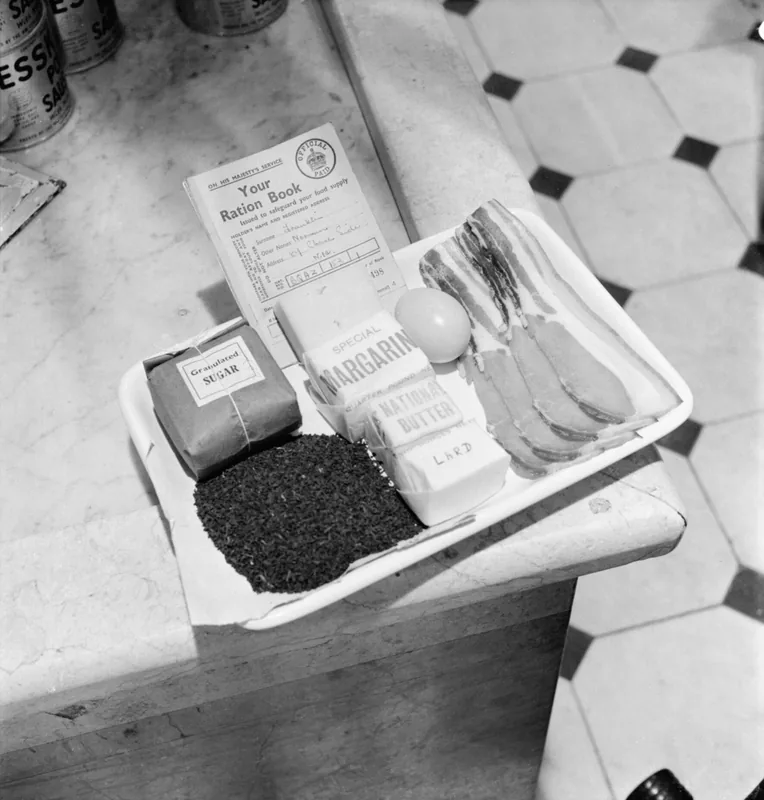
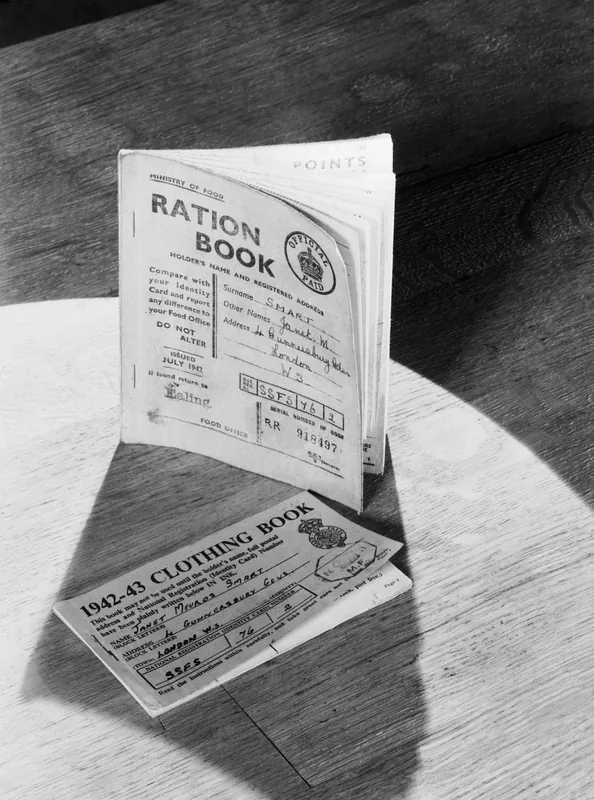
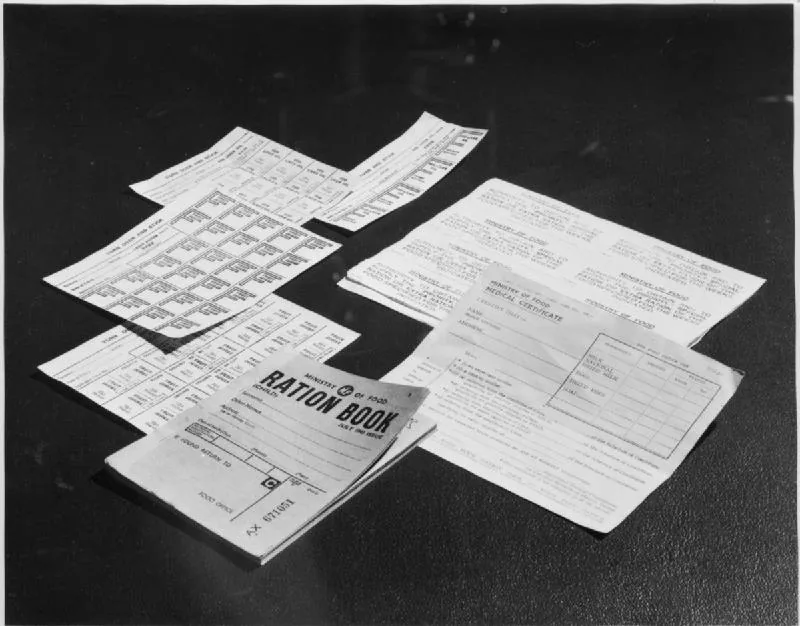
By the summer of 1939, an IWM Home Front page says, 50 million ration books had been printed, and on 1 November 1939 it was announced that food rationing would be introduced for the first time across the UK. [source] An archived IWM page, still official IWM wording, says food ration books for every man, woman and child came into use on 8 January 1940. [source] Those are two official beginnings — the announcement, and the books coming into use — and they are not merged.
The same current IWM page, in the words of curator Simon Offord, describes weekly allowances that “were tiny”: “just 4 ounces of bacon or ham, roughly two thin slices, along with 12 ounces of sugar and 4 ounces of butter.” Meat was added on 11 March 1940, measured not by weight but by a spending limit, which after several changes was reduced to one shilling and tuppence on 7 July 1941. Cooking fats and tea were rationed from July 1940, “with tea limited to just 2 ounces a week.” [source]
A Ministry of Food ‘Food Flash’ film, transcribed on the IWM’s tips page, gives a different official tea figure: “Tea ration is up to two and a half ounces a week and two and half ounces a week means ten ounces every four-week period.” Because packets could not be broken in half, the film says people would get twelve ounces one period and eight the next. [source] Two ounces, and two and a half: both official, not averaged.
Sweets, on the ration
The archived IWM page is plain: “Rationing of sweets began on 26 July 1942. The general ration book contained two pages of personal points to be used solely for obtaining sweets.” [source] The Food Flash, on the current IWM site, explains the starting amount: “You’ll want your personal ration book now if you want to buy sweets… And for a start everyone will get the same amount and that is two ounces a week.” You could go to any sweet shop. [source]
In the Commons, on 20 May 1942 — weeks before that start date — the Parliamentary Secretary to the Ministry of Food, Major Lloyd George, gave an official pre-war figure: “The estimated weekly consumption of chocolate and sugar confectionery in 1938 was six-and-a-quarter ounces, divided in approximately equal proportions between chocolate and sugar confectionery.” He added that six and a quarter ounces “may be very small, but it is three times the tea ration.” [source] That is 1938 consumption, not the wartime sweets ration, and it is not used to overwrite the Food Flash’s two ounces.
Victory did not end the story. The current IWM page says: “Sweets also briefly came off ration in April 1949, but the rush of children to the shops caused shortages so severe that rationing was reinstated in August 1949 and remained until 1953.” [source] The archived IWM page gives a month for the end: sweets were de-rationed in February 1953. [source] “Until 1953” and “February 1953” are both official IWM sentences; they sit side by side.
A chocolate bar that was not Dairy Milk
By 1941, IWM says, chocolate companies could no longer use fresh milk, “so the famous Cadbury’s Dairy Milk bars were replaced with the new version known as Ration Chocolate made with dried skimmed milk powder instead.” The museum holds an original bar. [source] The object record, EPH 10283, repeats that Dairy Milk ceased in 1941 when the government banned fresh milk, and quotes the wrapping: “This chocolate is an excellent food, and its recipe has been adopted to make the best possible use of ingredients under wartime conditions.” The controlled price on the wrapping is 2½d each. [source]
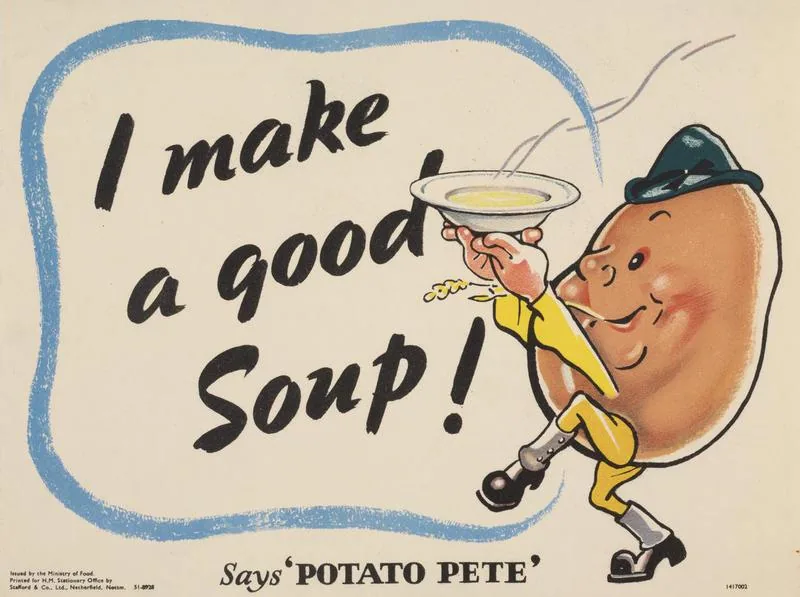
A points system, introduced in December 1941, later expanded to include biscuits, some preserves, suet, jellies and canned sweet puddings. Everyone was given 16 points for every four-week period; a tin of baked beans cost two points, a pound of raisins or sultanas eight. The allowance later rose to 24 points and was reduced to 20 in May 1945. [source] Potato Pete, on a Ministry of Food poster in the same war, is official food messaging about soup, not a sweet — a reminder that wartime “treats” were often whatever could be stretched.
Enjoyed a desk of official sweet stories, unblended firsts, and a clearly labelled gift shelf?
No pop-ups. No intrusive advertising. Just interesting stuff. A little support helps the next ReallyByte site get built.