Credits
Every photograph on this site
Licences were checked on each Commons file page on 18 November 2026. The photographs include public-domain UK official stills and posters, CC0, and Creative Commons licences (CC BY and CC BY-SA). No NC or ND files were used. Captions follow the file pages first. A historic tin or a museum sweet shop is labelled as that object, not as a product for sale.
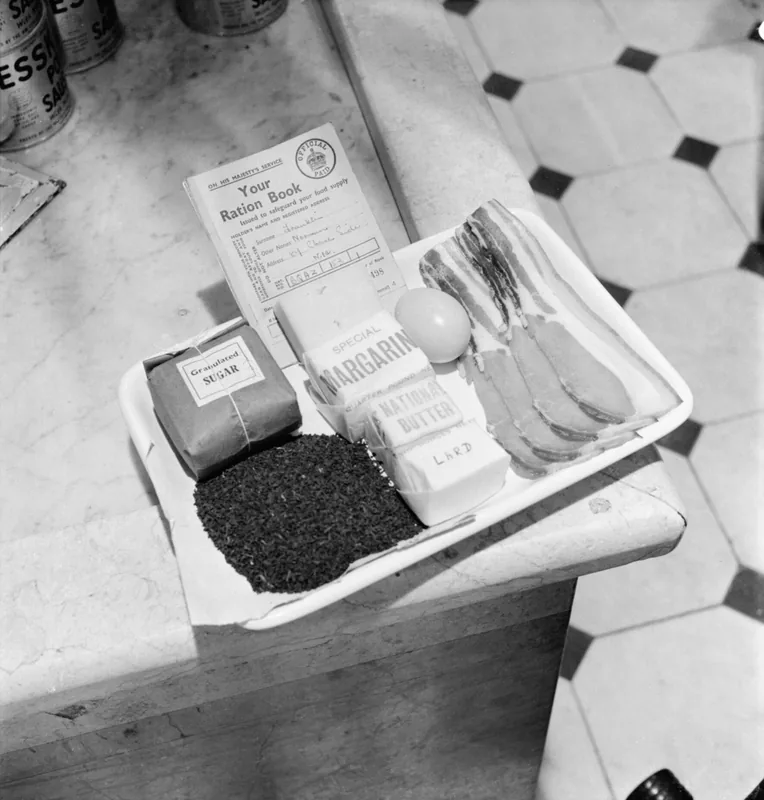
Tray containing a ration book and the weekly ration of sugar, tea, margarine, ‘national butter’, lard, eggs, bacon and cheese as issued to an adult in Britain during 1942. The file also names the ration book as being for a Mr Norman Franklin. Ministry of Information photograph, 1942. Official photograph: Ministry of Information Photo Division Photographer · Public domain · Ministry of Information / Wikimedia Commons 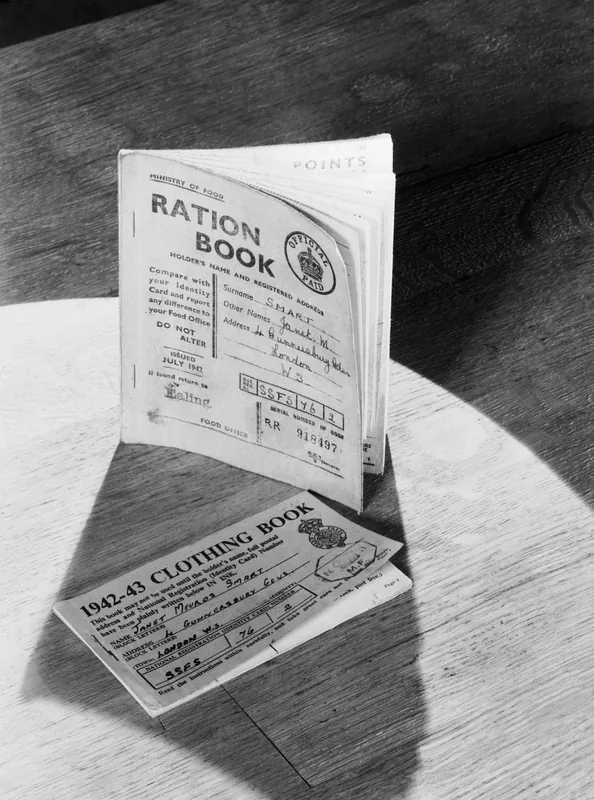
A ration book and clothing coupon book as issued to British civilians during the Second World War. The file caption: both food and clothing were rationed, as the government tried to conserve the limited supplies of food and raw materials. Ministry of Information photograph, dated between 1939 and 1945. Official photograph: Ministry of Information Photo Division Photographer · Public domain · Ministry of Information / Wikimedia Commons 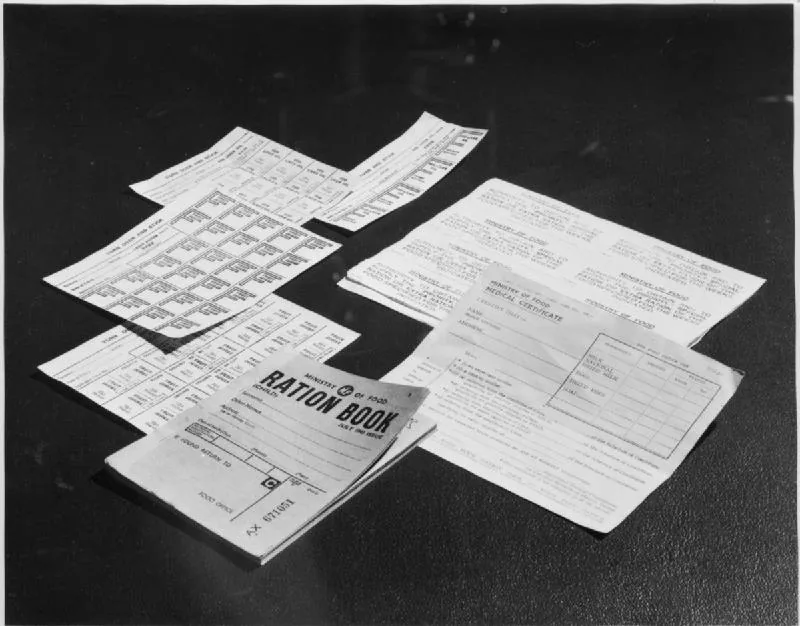
Rationing in Britain, 1943. The file caption: a child’s ration book (issued July 1943) and food-related certificates and coupons specifically for children, including coupons for free cod liver oil and fruit juice. Ministry of Information photograph, 1943. Official photograph: Ministry of Information Photo Division Photographer · Public domain · Ministry of Information / Wikimedia Commons 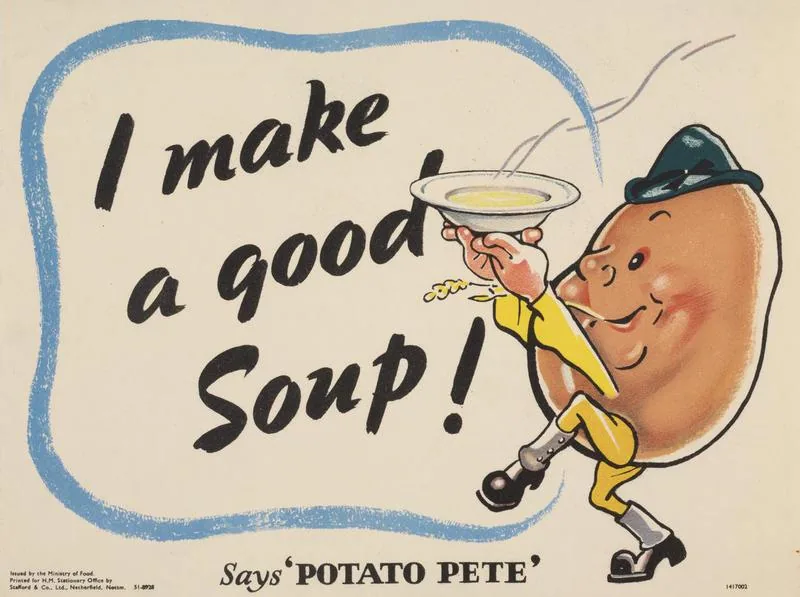
“I Make a Good Soup — Says Potato Pete.” Ministry of Food poster, printed by Stafford and Co, Netherfield, Nottingham, dated between 1939 and 1945. The file describes a cartoon Potato Pete holding aloft a steaming bowl of soup. This is official wartime food messaging, not a claim that potatoes replaced sweets. Official poster: Unknown artist; printed by Stafford and Co, Netherfield, Nottingham; published by the Ministry of Food · Public domain · Ministry of Food / Wikimedia Commons 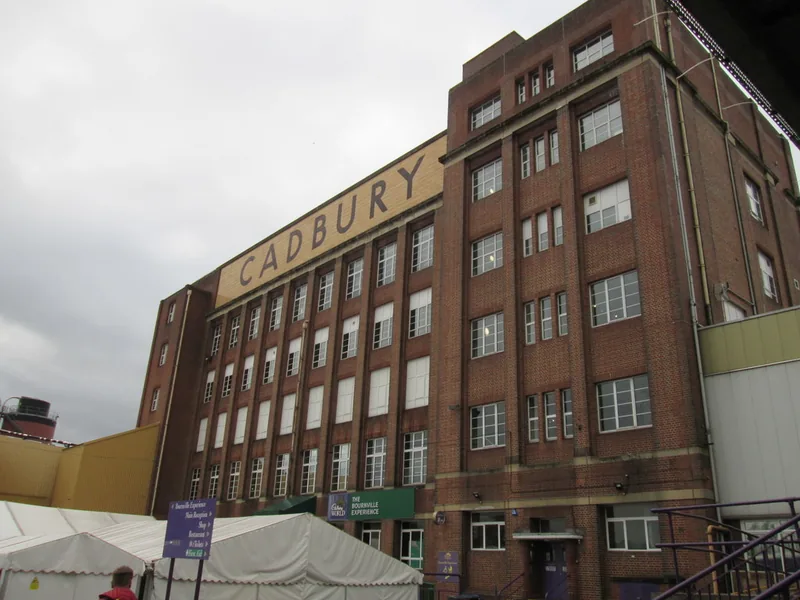
The file caption is “Cadbury Factory (Bournville),” photographed by Fabian Musto on 17 February 2018. This is a later view of the factory site Cadbury’s official story places at Bournville from 1879, not a photograph of the 1879 works. Photograph: Fabian Musto · CC BY-SA 2.0 · Fabian Musto / Wikimedia Commons / Geograph 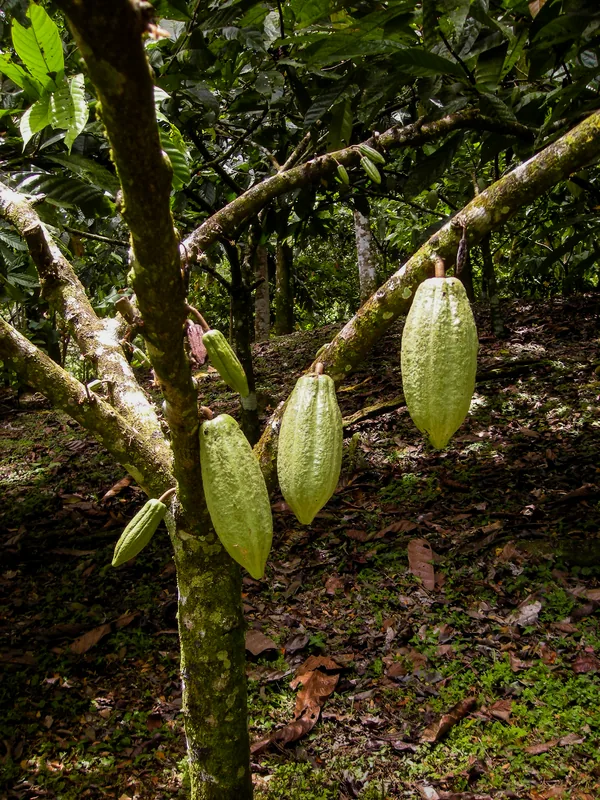
Cacao pods on a tree in Panama. Photograph by FranHogan, 3 March 2017. The photograph shows the fruit; official chocolate dates on this site come from the opened manufacturer and museum-related pages, not from this caption. Photograph: FranHogan · CC BY-SA 4.0 · FranHogan / Wikimedia Commons 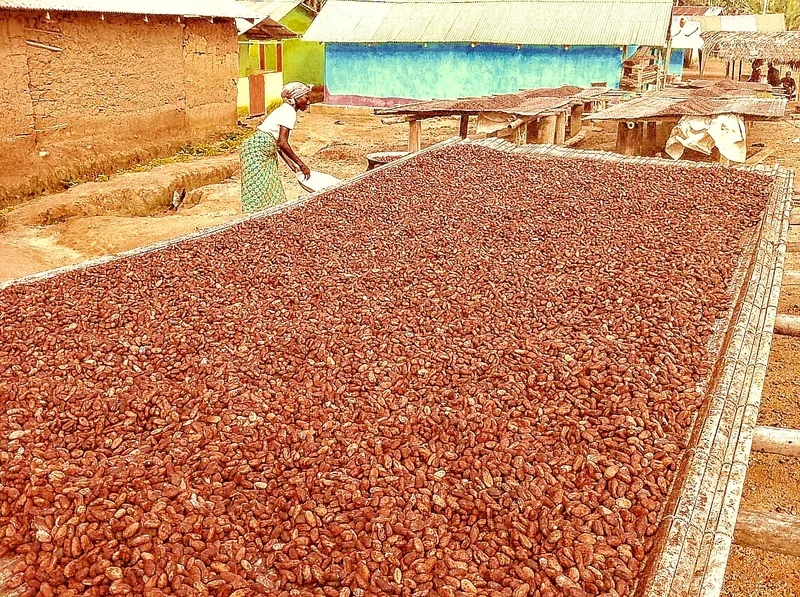
Cocoa beans drying in Mpenkro, near Kakum National Park, Central Region, Ghana. Photograph by Francesco Veronesi, 7 December 2014. Photograph: Francesco Veronesi · CC BY-SA 2.0 · Francesco Veronesi / Wikimedia Commons 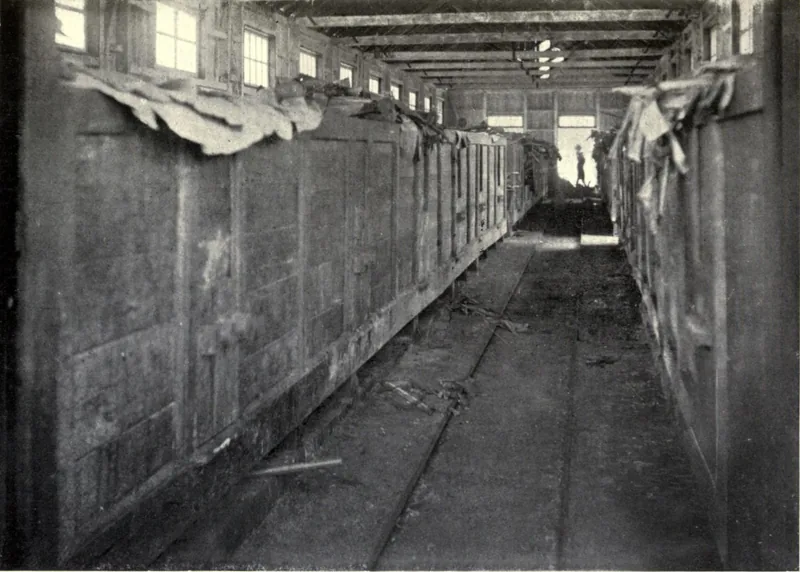
Cocoa fermentation chambers, early 1900s, Água Izé, São Tomé. Photograph by W. H. Johnson; the file date is 1912. Photograph: W. H. Johnson · Public domain · W. H. Johnson / Wikimedia Commons 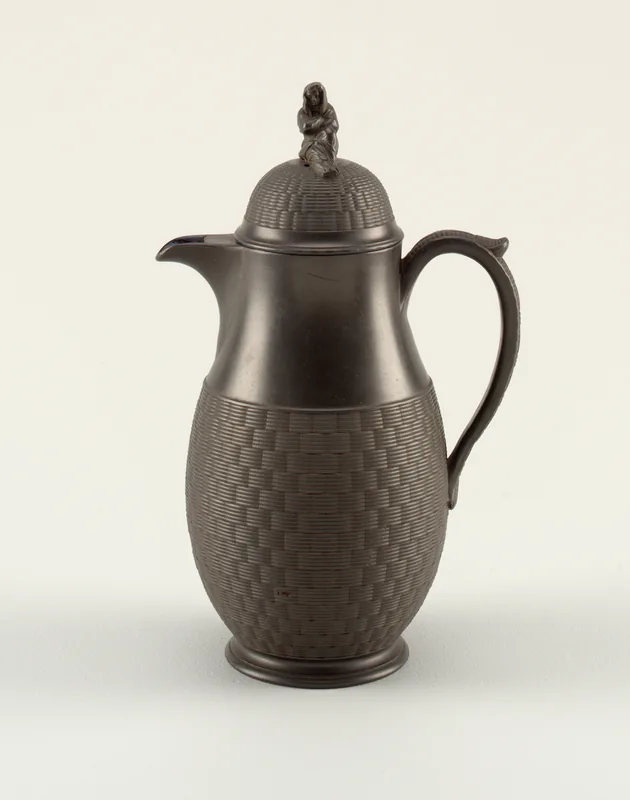
Chocolate pot and lid, England, late eighteenth century, made by Wedgwood. The file description: tall, slightly swelling body, long loop handle, short spout; high domed lid with finial in the form of a draped female figure. This is a pot for drinking chocolate, not a mould for a chocolate bar. Museum object photograph: Made by Wedgwood; file from a Cooper Hewitt / Smithsonian collection record · Public domain · Wedgwood / Cooper Hewitt collection record / Wikimedia Commons 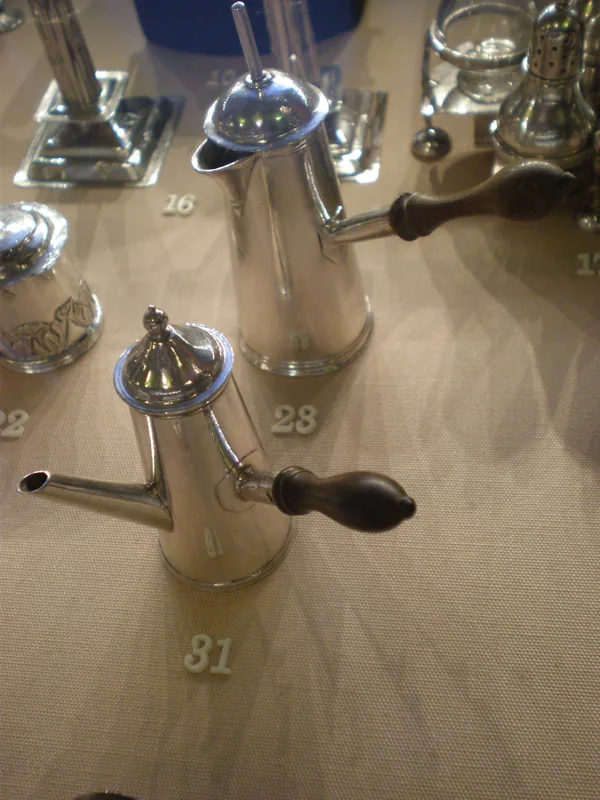
Miniature chocolate pot and molinet (top), about 1740, London, silver, John Hugh le Sage. Photographed by David Jackson in February 2010. The file: this miniature toy chocolate pot has an accompanying molinet, a stirring stick to prevent chocolate from separating. The term toy included fashionable trinkets for adults, as well as children’s playthings. Museum object photograph: David Jackson · CC BY-SA 2.0 · David Jackson / Wikimedia Commons 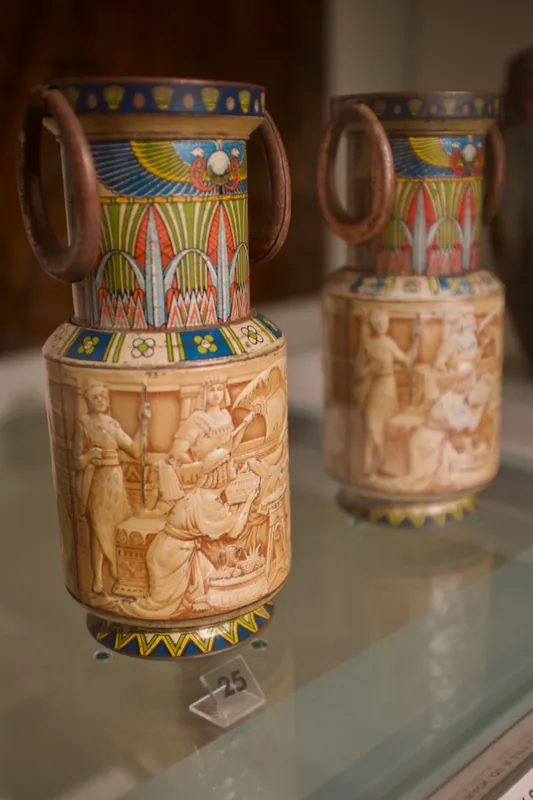
The file caption is simply “A Huntley and Palmers biscuit tin,” photographed by Robert-brook; the Commons file date is 24 January 2016. This is a historic tin, not a product listed for sale on this site, and not an official McVitie’s object. Photograph: Robert-brook · CC0 · Robert-brook / Wikimedia Commons 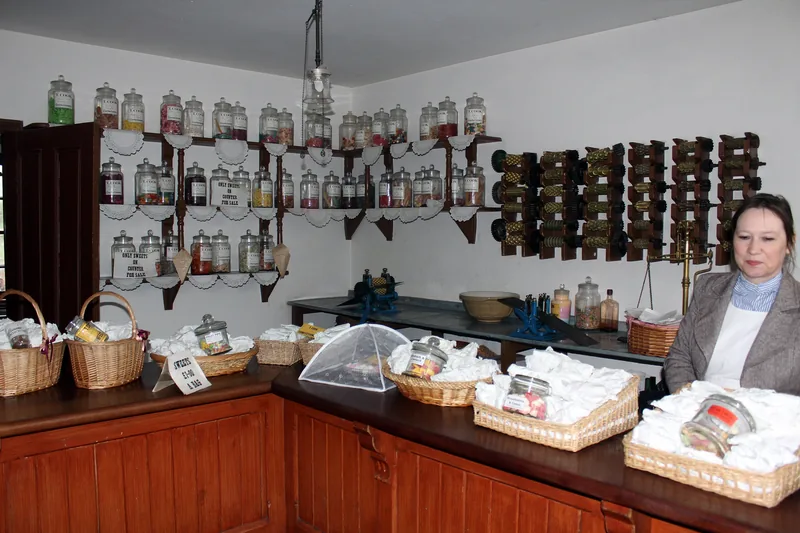
T Cook’s Sweet Shop, Black Country Living Museum. Photograph by Jo Turner, 4 April 2011. This is a museum street, not a shop that sells the Amazon gift searches on this site. Photograph: Jo Turner · CC BY-SA 2.0 · Jo Turner / Wikimedia Commons / Geograph
Enjoyed a desk of official sweet stories, unblended firsts, and a clearly labelled gift shelf?
No pop-ups. No intrusive advertising. Just interesting stuff. A little support helps the next ReallyByte site get built.